

From village workshop to energy DataLab: How Aadorp is turning Europe’s data vision into reality
A small Dutch village is testing an idea that could reshape how Europe’s energy transition runs on data, and it’s happening inside the 3DxVERSE project.
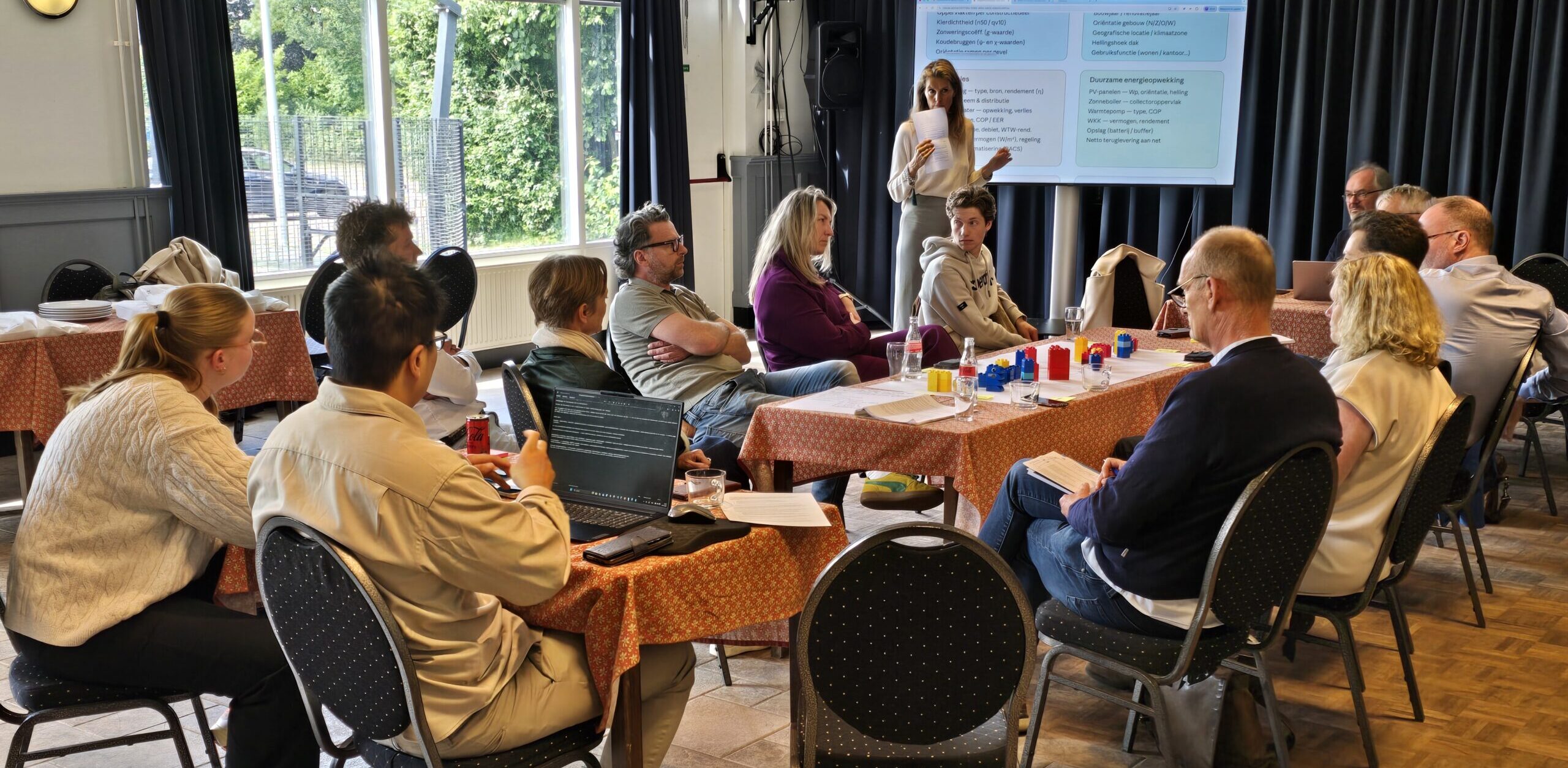
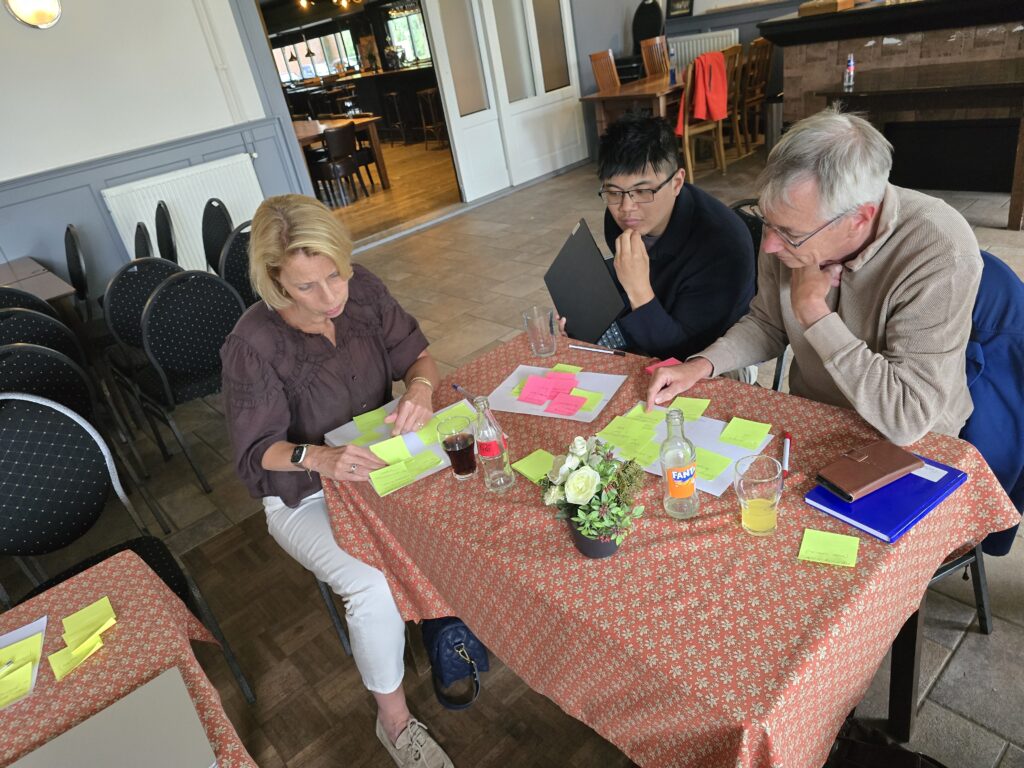
In the past months, stakeholders from Aadorp and neighbouring Almelo, including academia, utilities, energy communities and local government, came together for a series of Local Digital Twin (LDT) workshops as part of the EU-funded 3DxVERSE project.
At first glance, these sessions were about a small village in the east of the Netherlands. Look closer, and they’re part of a much bigger European story.
A Timely connection to EU policy
The European Commission recently published its new Data Union Strategy – Unlocking Data for AI, which names a critical bottleneck for Europe’s digital and green transitions: access to high-quality, trustworthy data. The strategy introduces the concept of DataLabs, trusted environments where organisations can safely share, combine, pseudonymise and use data to support AI, innovation and public policy.
Aadorp may well become one of the first practical, on-the-ground examples of what such an Energy DataLab could look like at local level.
Building a positive energy district, together
Within 3DxVERSE, Aadorp is developing a Local Digital Twin to support the design of a future Positive Energy District (PED). The goal isn’t only to model energy systems, buildings, mobility and public space but also to create a collaborative environment where stakeholders can jointly plan and evaluate future scenarios.
The workshops brought together:
- Energy network operators
- The municipality
- Housing associations
- Residents
- Energy cooperatives
- Other local stakeholders
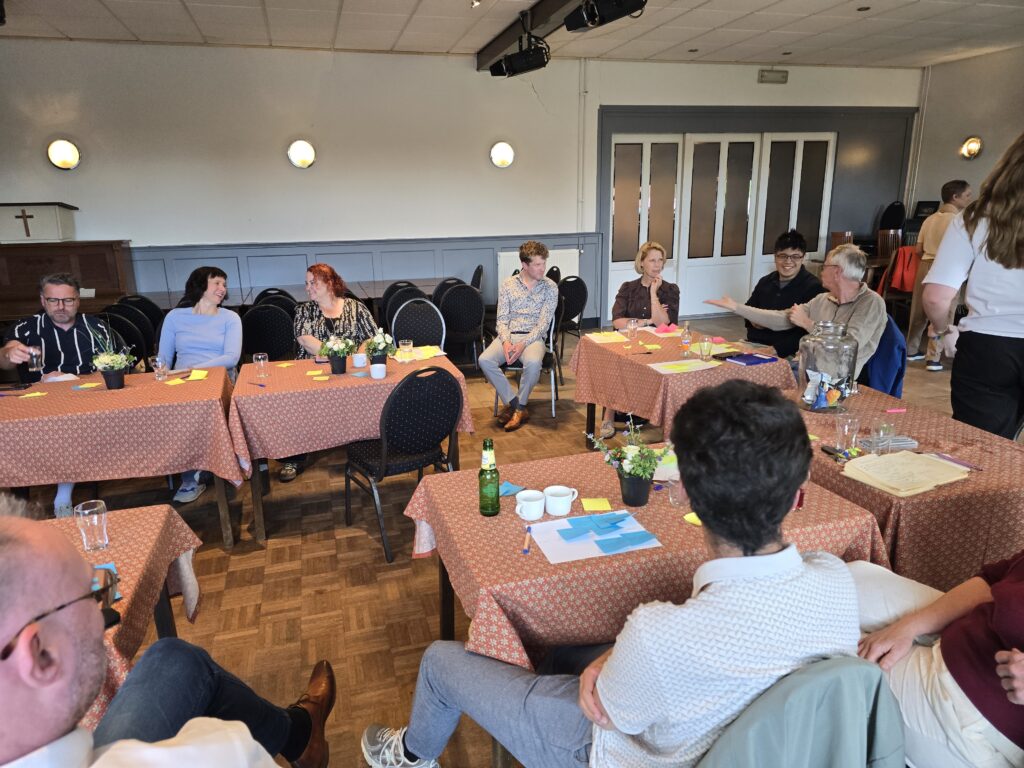
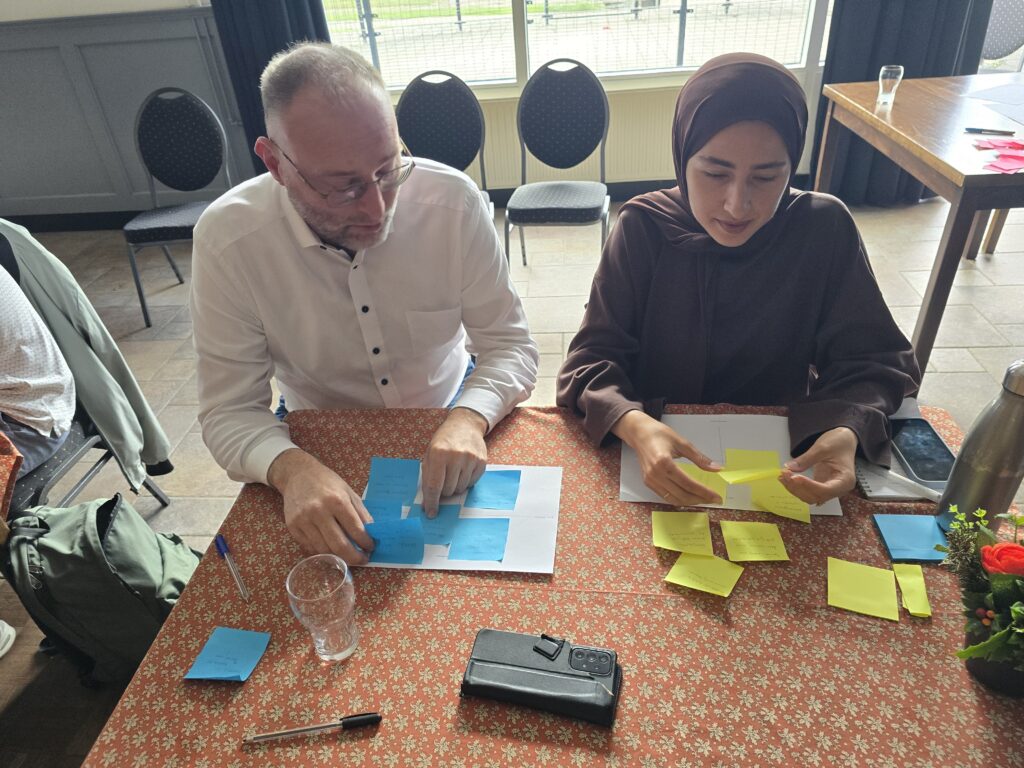
Together, they worked through some fundamental questions: What information is actually needed to support decision-making? Which data can organisations realistically share? Under what conditions can that data be exchanged How can privacy, security and trust be guaranteed? How can solutions scale across Twente and beyond?
The ambition emerging from these discussions is to establish practical agreements on data governance, data sharing and digital collaboration that directly support the Local Digital Twin and future energy planning in the region.
Why data is the missing piece of the energy transition
Europe’s energy transition increasingly runs on data. Managing renewable generation, flexibility, heat networks, electric vehicles, energy communities and future hydrogen systems all depend on information that today is scattered across organisations:
- Utilities hold the network data.
- Municipalities manage spatial planning information.
- Energy communities collect local energy insights.
- Housing associations understand building stock characteristics.
- Citizens generate valuable consumption and behavioural data.
The challenge was never a lack of data. It’s connecting these datasets in a way that’s trusted and useful. That’s precisely where the Data Union Strategy positions DataLabs: as bridges between data ecosystems and innovation ecosystems, helping organisations aggregate, curate, label, anonymise and prepare data for AI and decision-support, all while keeping control over their original data.
Aadorp as an Energy DataLab pilot
The conversation in Aadorp is increasingly moving beyond a traditional digital twin project. What’s emerging is the concept of an Energy DataLab, one that could:
- Connect local energy stakeholders through shared governance arrangements
- Support secure sharing of energy, mobility, environmental and infrastructure data
- Enable AI-driven analysis and forecasting
- Generate synthetic datasets for testing and training
- Support local energy communities in decision-making
- Serve as a trusted gateway towards emerging European Energy Data Spaces
Rather than building a central database, the approach follows European principles of data sovereignty and interoperability. Organisations stay in control of their own data while participating in a shared ecosystem.
The role of AI and synthetic data
One of the most interesting threads in the Data Union Strategy is its emphasis on synthetic data, artificially generated datasets that reproduce the statistical characteristics of real data without exposing anything sensitive.
The Commission sees synthetic data as a key enabler for AI development, especially where privacy and confidentiality matter.
For Aadorp, that opens up some exciting possibilities: a synthetic population of the village, simulations of future energy demand, testing of hydrogen and heat network scenarios, modelling of electric vehicle adoption, and evaluation of policy options before they’re ever implemented, all without exposing personal information.
Connecting a local community to European infrastructure
The broader significance of Aadorp lies in its potential role as a bridge between local communities and European digital infrastructure, through initiatives including:
- 3DxVERSE
- LDT4SSC
- The EU Local Digital Twin Toolbox
- Common European Data Spaces
- Future Energy Data Spaces
- SIMPL interoperability services
Through this work, the Local Digital Twin evolves from a visualisation platform into a trusted environment for collaboration, and the Energy DataLab evolves from a simple data platform into a tool for collective intelligence.
What’s next
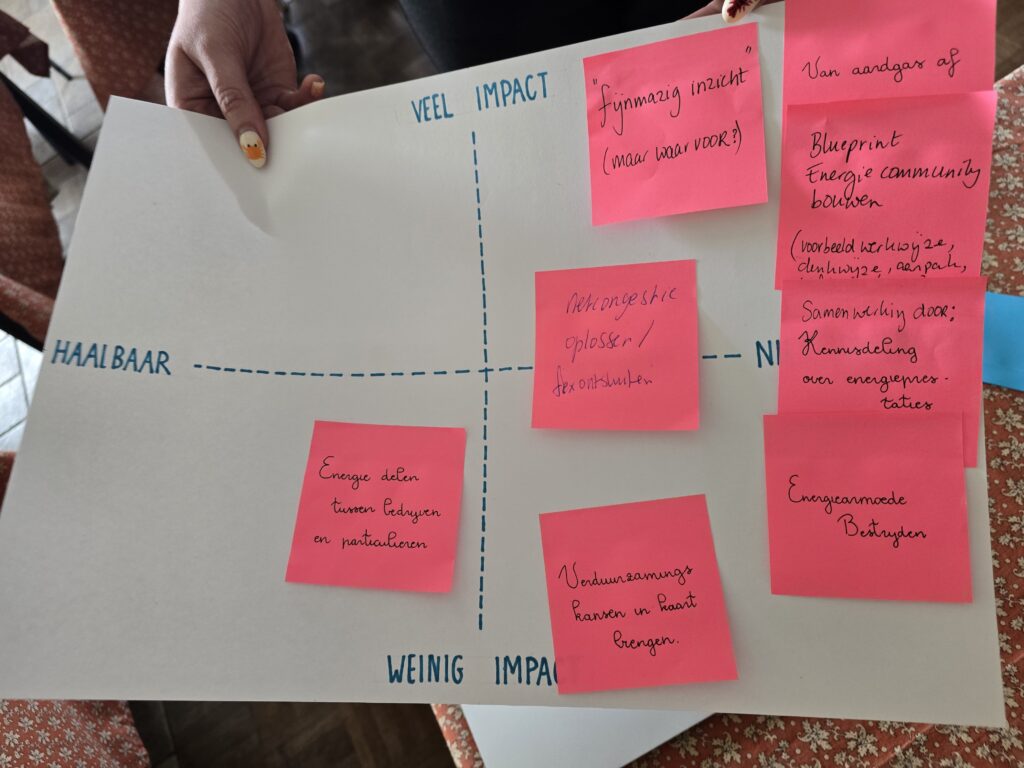
Upcoming workshop sessions will focus on governance, architecture and validation of the proposed approach.
The ambition is simple: to show how a small village can become a practical testbed for Europe’s future Data Union. If it works, Aadorp could offer a model that municipalities, energy communities and regions across Europe can replicate, integrating Local Digital Twins, AI and secure data sharing to accelerate the energy transition.
The future of energy isn’t just renewable. It’s digital, collaborative and data-driven. And perhaps, it begins in a village called Aadorp.