

Regulations and Standards Go Hand in Hand”: A Blueprint for Smarter Cities
Municipalities today are drowning in data standards and policies, unsure of where to start or which ones to follow. Enter Martin Serrano, standardization lead for the SENSE project and researcher at the University of Galway. Serrano has taken on the monumental task of decluttering the technical chaos. In this conversation, he breaks down the four-layer “catalog of standards” developed by SENSE, offering city technologists a structured journey from basic connectivity to the complexities of the CitiVerse.
3DxVerse: Hi Martin. Thanks a lot for taking the time to talk with us, we appreciate it a lot. Could you quickly introduce yourself?
Martin: My name is Martin Serrano from the University of Galway in Ireland. I am a partner in the SENSE project (SENSEverse), and I am responsible for standardization activities and dissemination.
3DxVerse: In very simple terms, could you describe the essence of what the SENSE project is about?
Martin: SENSE aims to connect cities and citizens by extending the understanding of how cities function into a virtual environment. We use technologies such as virtual reality and metaverse concepts to help people better understand how urban systems work. At the same time, we aim to strengthen the sense of belonging.
One of the challenges in Europe today is that many people do not identify with emerging technologies. Through SENSEverse, we hope to bridge the gap between these technologies and the cities themselves, making them more accessible and relatable to citizens.
3DxVerse: You mentioned strengthening the sense of belonging, particularly at the neighborhood level. What specific activities or interactions within your virtual spaces are designed to create this social connection rather than just visual exploration?
Martin: The project approaches this from several angles.The project combines a metaverse-like technological environment with interoperable data spaces that enable secure and structured data exchange. We want citizens to understand not only how the services function, but also how data interoperability works behind the scenes. A key engagement strategy is focusing on a major real-world challenge: flood risk management and water management.
Climate change and extreme weather events are significant concerns for citizens, and this topic provides a concrete and relevant scenario for involvement. Flood management serves as one of our core use cases to attract and engage people. Through interviews, interactive activities, and testing scenarios, we involve citizens directly in evaluating and shaping the technologies within this context.
3DxVerse: You also mention alignment with new data infrastructure. How does this ensure that your virtual world is interoperable and can connect with other data-driven platforms, such as sustainability-focused digital twins?
Martin: This is one of the core activities of the project. We focus on identifying best practices, observing existing standards, and developing new standards where necessary. Our ambition is for European countries and municipalities to view SENSE as a reference implementation, as we are aligning with the majority of relevant standards.
While standards do not yet exist for every aspect, we are also developing our own methodologies and proposing them as contributions to the broader ecosystem. For that reason, we are actively engaging with international and European standardization organizations to ensure alignment and interoperability.
3DxVerse: Could you explain a bit more about the standards you mentioned?
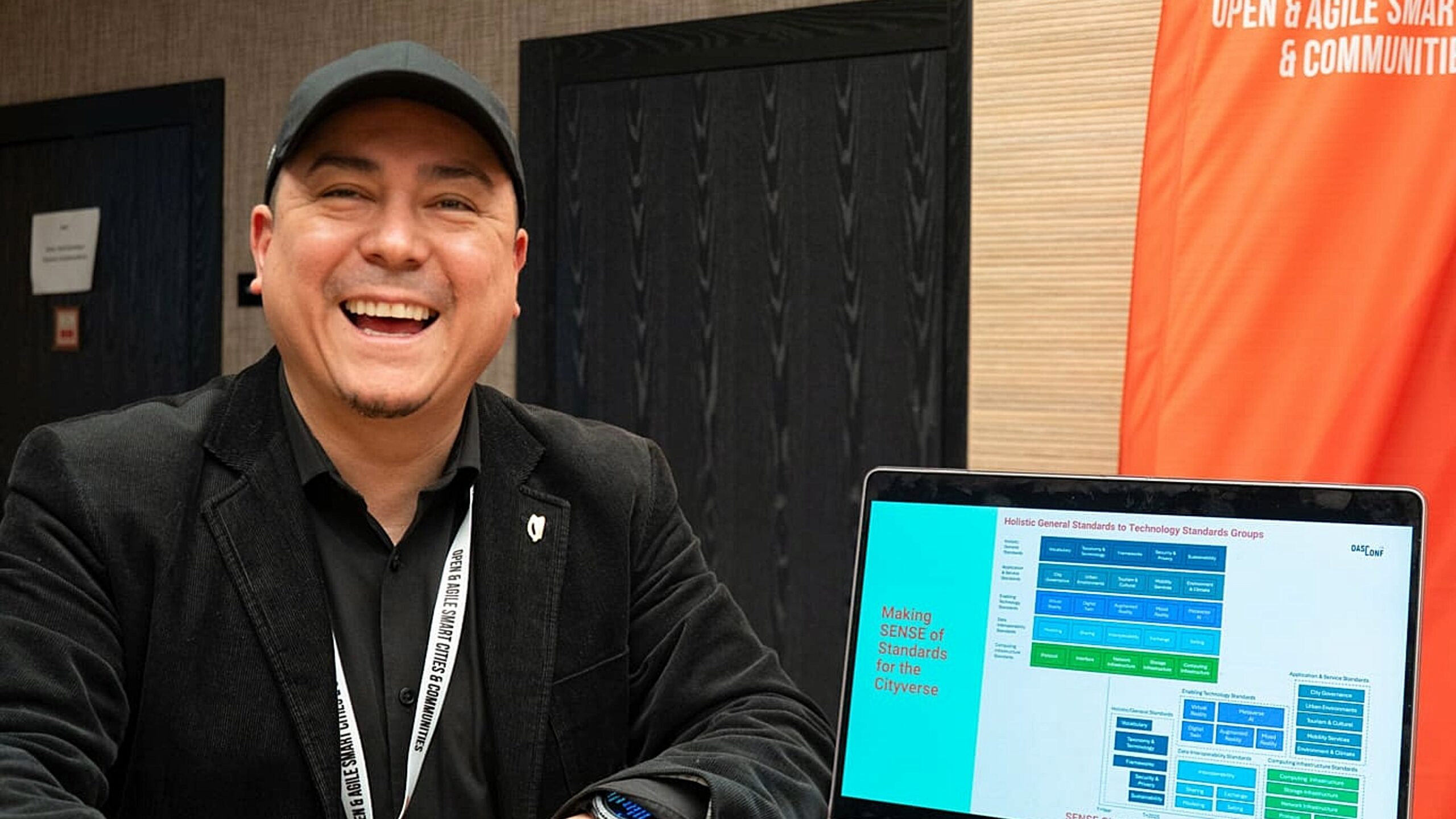
Martin: One of the most innovative aspects of the project is how we organize and structure existing standards. Today, cities face an overwhelming number of standards and policies. Municipalities attempt to follow and implement them, but often the process is fragmented and does not function efficiently in practice. To address this, we have developed a structured approach. We have created a kind of vocabulary and documented the existing standardization activities.
These are organized into layered categories. At the infrastructure level, technologists can identify relevant standards related to systems and connectivity. At the data layer, data scientists can find standards applicable to data governance and interoperability. On top of that, there are application layers, including Metaverse and CitiVerse technologies. We have identified four main layers and created a catalog of standards accordingly. In addition, we developed a methodology that guides municipalities, technologists, and other stakeholders from basic standards to more complex ones. It is essentially a structured journey.
This work has been documented in one of our public deliverables, which serves both as a catalog of standards and as practical guidance for cities, technologists, and sector professionals interested in implementing these technologies properly.
3DxVerse: If you had to explain this to someone without a technical background, for example in a municipality, how would you describe it?
Martin: The explanation begins with identifying a concrete use case. First, we need to understand the specific needs and requirements. Then, we examine the relevant regulations, as regulations are often the main constraint or guiding factor. Once the regulatory framework is clear, we identify the standards that already exist and determine how they apply. If necessary, and if resources allow, we may also contribute to developing new standards where gaps exist.
Regulations and standards go hand in hand, and technology must follow them. In our field, we not only apply existing standards but also help develop new ones when needed. In simple terms, the process involves three steps: understand the needs, identify the applicable standards, and then apply or further develop them accordingly.
If you want to learn more about the SENSE project visit their website here or follow their LinkedIn page.